
By Patrick Cahillane – Life, Executive & Business Coach with One Source International Coaching & Training and Founder of the One Source Personal Development Network
Get The Point! –
At this point and time, I’d like to introduce you to Gerry, who will be assisting me in your
personal development training and the development of your system.
Gerry is forty-two years and has been married for over twenty years; has three beautiful children
ages twelve, fourteen and sixteen. Gerry is self-employed, owns and operates a small electronics
shop, and also considers himself to be an above-average chess player.
Although Gerry is a fictional character and created solely for the purpose of assisting me in your
training, let’s pretend I first met Gerry at a business lunch being hosted by the local chamber. Gerry
and I hit it off right from the start. After a few additional meetings, he expressed an interest in
learning more about my personal development system.
At the time he was experiencing some cash flow problems with his business, and this had resulted
in some additional stress in both his business and personal life.
In addition to his financial problems, he had several health issues. He was about twenty-five pounds
overweight, a heavy smoker and felt that, lately, his alcohol intake was becoming a problem.
After taking the time to really get to know Gerry and his situation, I was confident that my system
of personal development would be of great benefit to him. I was not, however, convinced that Gerry
was really committed to producing what I refer to as lasting results.
The reason for my lack of belief in his commitment was based on the language he would use to
communicate his situation. For example, he would say things such as ‘I really should cut down on
the cigarettes and the booze, but every time I try, something happens that makes me go back on
them’.
Or when he talked about problems with his wife, he would say things like ‘I know I should try
harder, but she just really knows how to push my buttons, or she just doesn’t understand the amount
of stress I’m under’.
Now the problem with Gerry’s way of thinking was that he was shifting the blame. Something
would happen that would MAKE him go back on the cigarettes and the drink. Or he SHOULD try
harder, but his WIFE just KNOWS how to push his buttons, or She just doesn’t understand. At the
end of the day, Gerry wasn’t taking ownership of his problems.
I had to make Gerry understand that in order for my system to produce long term results, he had to
own up to his problems and get himself to the point that he MUST change and not that he SHOULD
change. In the event that you have not figured it out yet, this also holds true for you.
I believed that because Gerry wasn’t ‘owning up to his problems’ and was ‘shifting the blame’, he
hadn’t created enough pain in his life to make change a must.
I knew that in order for Gerry to create a lasting change in his life, he had to get to the point that
his current situation was so painful he literally couldn’t take it anymore. He had to get to the point
that he truly felt he must change, and he must change now.
With this in mind, I explained to Gerry that I would like to help him, but I simply did not believe
he was up to the challenge.
Gerry’s first reaction was to become somewhat angry at my reply. ‘What do you mean I’m not up
to the challenge?’ he replied in a sharp tone. ‘You don’t know what I can or can’t do’.
This continued for the next few moments until I simply replied to his comments with the words
‘convince me’.
At first poor Gerry just looked at me in a state of confusion before he finally replied, ‘what do you
mean by convince me?’
I went on to explain to Gerry all the reasons I had for not being convinced he was ready to create a
lasting change, but there was an exercise he could do that would not only convince me, but more
importantly, convince him.
I continued to explain to Gerry an exercise I had requested individuals to do several times in the
past. The exercise I asked Gerry to do was to write a short essay on how he honestly believed his
life will be in five years’ time if he doesn’t change.
To my delight, Gerry was more than up for the challenge and returned the next day with the
following essay:
Where will I be?
Where will I be five years from now if I don’t change? More than likely, I will be divorced. I will
be living on my own in some run down, dirty apartment.
My business will have gone bankrupt, and I’ll be lucky to be able to hold down a job because my
drinking will have gotten so far out of hand that most likely I will be an alcoholic.
My kids will do their best to keep in touch with me, however, I have no doubt that over time their
visits will become less and less and even when they do visit, I will always see the disappointment
in their eyes.
They will no longer be able to count on me to provide them with guidance or even with the money
for things like education and perhaps even a simple thing like a proper birthday present.
Of course, their mother being the strong woman that she is will have moved on and most likely have
a new man in her life, which of course, she will deserve.
Although I won’t even be fifty, thanks to the cigarettes and the booze, I will easily pass for a man
ten years older. I’ll be fat with no energy and wake up every morning coughing and feeling the
effects from the night before. Any and all potential that I processed in my early days will have long
since vanished.
As I walk down the street, I will undoubtedly meet people who knew me when I used to be someone.
They will pass themselves and say hello, but I will know they only pity me and will be thinking to
themselves, what a waste of a life.
After reading Gerry’s essay, there was absolutely no question in my mind that the man standing
before me was not the same man who stood before me the previous day. Something had changed
in him. I could see it in his eyes, and I could hear it in his words.
I extended my hand and said, congratulations, you are halfway there. Gerry looked more confused
than he had been the previous day when I had asked him to convince me.
Halfway to where?’ he asked. ‘Halfway done with the exercise,’ I replied.
I continued to explain that the exercise was a two-part exercise. The second part of the exercise was
to write a brief essay on where he will be five years from now if he does make the changes in his
life that he desires to make.
Being the good sport that Gerry was he had no problems accepting part two of the exercise and
returned the very next day with the following:
Where will I be (Part II)
It’s great to be alive. I have just completed my morning run, and I’m getting ready to have a late
breakfast with Lorraine. I have decided to take the day off because, truthfully, I feel I deserve it.
After all, I’ve been working hard to get things ready for the grand opening for our third store, the
biggest and best by far.
Lorraine and I have decided to pay a surprise visit to Marie and Kim down at the University and
take them shopping. They have a ski trip coming up and we want to make sure they have everything
they need.
Michael is disappointed he can’t go, but with the grand opening of the new store, I can’t do without
him. He’ll be okay. He has our trip to Australia to look forward to this summer.
Next week the chamber is hosting a charity dinner, so I sponsored a table and will be giving my
managers a night out. It should be fun. Lorraine is looking forward to a good meal and a night of
dancing.
Of course, I’ll be the designated driver, but that’s fine with me. It will give me a chance to test out
the new BMW on the freeway. Life really is good.
As you can imagine, after reading the above, I was more than convinced that Gerry was ready to
begin his journey to creating a lasting change in his life.
But what do you think was my main objective of having Gerry complete this exercise?
If you thought to have Gerry create pain to not changing and create pleasure by making some
positive changes in his life, you would be 100% correct. This is exactly what I want you to do right
now.
I want you to do the same exercise as Gerry. Write a brief story or essay on what your life will be
like in five years if you don’t change. Really take the time to think about it and don’t be easy on
yourself.
Think seriously about your relationships and your health. Think of who and what you will lose in
your life. Think about your finances and think about all the things you will never experience to the
fullest if you don’t change the direction your life is currently heading.
Once you have completed writing about how your life will be if you don’t change, take a few
moments to read and, more importantly, really feel the effects. Take enough time to really feel and
experience the emotions of sadness and a sense of loss.
Next, I want you to take the time and complete part two of the exercise. Write about how amazing
your life will be in five years if you make a committed decision right now to create the life you
desire.
Don’t hold back. Write about how amazing your relationships will be. How amazing you will look
and feel. How much you have grown and how secure you will be financially.
When you’re finished writing, take some time to really feel the effects of living the life you desire.
Feel all the positive emotions and create a clear vision in your mind of exactly what a day in your
future life will be like.
I cannot stress strongly enough how important this exercise is. Please DO NOT continue with this
chapter until you have completed both parts of the exercise.
Did you do it? If you haven’t, please DO NOT continue until you have. If you have completed the
exercise, hopefully, you now have some pain associated with not changing and some pleasure
associated with changing.
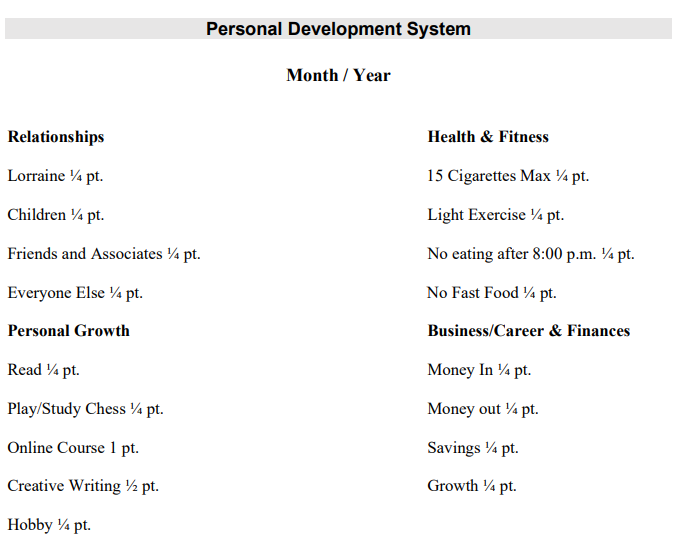
Once I was convinced that Gerry was ready to make what I refer to as a lasting change, we got
started. Similar to what you and I did in the previous chapter, I guided Gerry through the setup of
his own personal development system. I had him write out his four key areas. Then I helped him to
select his action items, and finally, I helped him to assign his points.
When he was finished, his system looked something like this:
‘What’s next?’ Gerry asked as we finished putting the final touches on his personal development
system.
I replied by instructing Gerry to begin the process of directing his focus to the four key areas listed
in his system. Begin paying special attention to your relationships and completing as many of the
actions on your list in the other key areas as possible, I continued.
I finished by telling him just to do his best and not to be overly hard on himself in the event he
didn’t have enough time or find it possible to complete every action listed within his system.
It’s all about progress and not perfection, I assured him. I then instructed him to return the next day
and update me on his progress.
The following day Gerry returned with his system in hand. I asked him how he felt he did, and he
simply replied, ‘I really don’t know?’
I assured him by saying at this point it didn’t really matter, but we would soon find out.
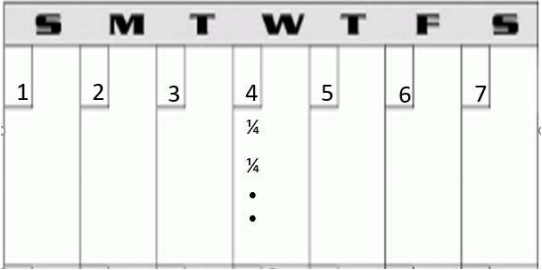
I presented Gerry with a blank page from a calendar.

I then instructed Gerry to write in the dates on the calendar. Once he had finished that task, I took
the sheet and his system that we had completed the previous day and began asking him questions.
‘In regard to your relationships, how did you feel you got on with Lorraine yesterday?’ I asked.
At first, he seemed someone put off, but then replied by saying, ‘pretty good, I guess.’
I then asked him if he felt it was good enough to earn a ¼ point. He took a moment to think about
it and then said ‘yes.’
Based on his answer, I wrote a small ¼ pt. on the calendar under the previous day.
Then I asked him, ‘how about the kids? Do you feel you earned your ¼ pt. there?’
Gerry smiled as if to say, I think I know where you are going with this. He replied by saying yes,
so I added another ¼ pt. under the first one.
‘And what about your friends and associates?’ I asked.
Gerry took a moment to think about his answer before replying, ‘well, I must admit, I was a bit
short with one of my staff members yesterday.’
For this I simply put a dot under the previous ¼ pt.
‘What about everyone else you came into contact with?’ I asked.
Again, Gerry took a few moments to think before he answered, ‘I did have an argument with one
of my customers over the return of an item, but that really wasn’t my fault,’ he quickly added.
‘Did the customer force you to argue?’ I asked.
‘Well, no,’ he replied.
After hearing his answer, I simply placed another black dot under the first one above it. When I had
completed the first key area of Gerry’s calendar, it looked like this:
The next key area to be reviewed and recorded was the area of personal development.
This was an easy one as last night is the night Gerry had dedicated to taking the online course he
had recently signed up for. The course took up the entire evening, so he received the maximum
amount allowed for any of the key areas, which is a score of one full point.
The last area to be rated was the key area of Business/Finance.
Similar to the area of his relationships, I explained to Gerry this could be a tricky one simply
because not all of the action items are straightforward. I continued to explain that he would have to
decide if he believed he earned the points based on his performance the previous day.
After taking a little time to think and reflect on the previous day, Gerry announced that he did
believe he was productive and he was organised in his business. However, based on the fact that he
had an argument with a customer, he was uncertain as to what to do in regard to the ¼ point under
heading of money in.
‘That argument already cost me a ¼ point in my relationships, ’ Gerry stated. ‘Is this going to cost
me again?
‘Allow me to answer your question with a question. Do you believe you were performing your
duties to the best of your ability and giving 100% to your business when you allowed yourself to
get into an argument with a paying customer?’
‘Obviously not’, Gerry replied in a slightly embarrassed tone.
‘Think of it this way,’ I continued. ‘Due to the fact that your argument has cost you a ¼ point in
not just one but two separate key areas, you will link up additional pain to that sort of behaviour.
This will assist you in the future when you find yourself in a similar situation and hopefully remind
you to act in a more professional and patient manner.’
Gerry slowly grinned and nodded his head as if to say ‘I get it’ before continuing to update me on
the remainder of how he got on in the key area of his business and finances.
He went on to tell me that he did stick to his budget and tracked all his spendings so felt he earned
his ¼ point under the heading of money out. He also devoted about thirty minutes to reviewing all
of the month’s spending and took the time to shop around for a better deal on his car insurance to
see if he could save any additional money and believed he did earn his ¼ point under the heading
of savings.
‘I found out that because Lorraine and I are both insured with the same company, we are entitled
to a 10% discount. I placed a call to my insurance company today, and they implemented the
discount immediately, so I am already saving money.’
‘Good for you,’ I replied. ‘That’s another ¼ point added to your daily totals. Anything else?’
Gerry went on to explain how he did not devote any time to growing the money in his savings, so
he did not believe he earned his ¼ point in this area of growth.
‘That’s ok,’ I explained. ‘Remember it’s all about progress and not perfection.’
When Gerry and I completed assigning points to the key areas, it looked something like this:
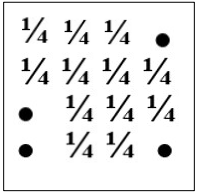
I then quickly added up Gerry’s total points. He had a half-point for his relationships, a full point
for his health and fitness, another full point for his personal growth and a half-point for his business
and finances. When I added all the points together, he had a total of 3 points.
‘Excellent, you’re off to a good start’ I commented. He looked at me in a confused state before
replying, ‘but I didn’t get everything done; how good of a start can that really be?’
‘That’s the beauty of the system,’ I explained. ‘You don’t have to get everything done, and you
don’t have to do everything right. The system allows for imperfections. After all, the goal here is
not to become perfect; the goal is simply to make small positive changes on a consistent basis that
will improve your life while creating more balance.’
I then presented Gerry with the following rating system that works in conjunction with the system.
I went on to explain that to determine his day’s average he simply needs to add up all his points for
the day. This will provide you an overall average for the day and some insight to what type of day
you had.
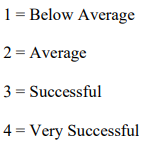
After taking the time to explain the rating system, I once again reassured him that he was off to a
good start as he had a total of 3 points, which indicates he had a successful day based on our rating
system. I then asked him the following question.
‘Based on our rating system, what standard would you like to set as a goal to shoot for the upcoming
week?’
Gerry took a moment to think before stating that he would love to have a very successful week,
however, as he is only getting started, would be more than happy to have a successful week.
‘Great,’ I replied. ‘Do your best to get at minimum of 3 points per day out of the 4 points possible.’
I then instructed him to continue using his system every day and to return with his results in one week.